Intersectionality in organisations

As part of a series defining key vocabulary around diversity, equity and inclusion, in 2023 I compiled this brief introduction to intersectionality for an Automattic Talent division meetup. The original piece was an interactive conference session. I've lightly reworked it for publication here.
Thinking about identities
Think about the following identities, or categories. Reflect – how do you, personally, identify within each category?
- Socio- economic status
- Body size/shape
- Education level
- Gender identity
- Race / ethnicity
- Country of residence
- Age
- Ability / Disability / Neurodiversity
- Legal nationality
- Domestic / caring (eg parent, carer)
- Cultural background
- Sexual orientation
- Religion/ spirituality/ philosophy
Each one of these identities, and combinations of these identities, comes to the fore in different ways in different areas of your life.
- For instance, perhaps when you’re at work, you are most aware of being an Indian person with a law degree.
- In your home, you might be most aware of being a practising Hindu and a father.
- At a work conference, and while travelling, you might be most aware of having an Indian passport, and having coeliac disease.
- When accessing healthcare, you might be most aware of being over 50 years old.
This is all one person, but different aspects of their existence will affect them in different ways through their daily life. Some of these experiences are positive. Others may be challenging. Some identities may make this person more likely to be subject to discrimination. And crucially, this discrimination may be compounded if multiple identities are at play at any one time, and start to deepen the disadvantages they may already be facing.
How do your own identities interact with each other? When do certain identities come to the fore? Is your experience of some of your identities, or some of your combined identities, more difficult or challenging than others?
Intersectionality
“Intersectionality is the overlapping and connected nature of personal characteristics, such as ethnicity, race, socio-economic background, etc. This connected nature creates an overlapped and connected experience of discrimination.”
— Sheree Atcheson, “Demanding More”
Alternatively, there's a short introduction in this video:
Why does intersectionality matter in the workplace?
One answer is that it makes good business sense to have staffing and leadership that reflect the diversity of the society in which we operate. McKinsey's 2023 study reported that companies in the top quartile for executive-team gender or ethnic diversity were 39% more likely to outperform their bottom-quartile peers financially. However, the relationship does not establish causation. And, the case for diversity doesn't just have to be economic. There are many sound practical, social and ethical reasons for creating more diverse and inclusive organisations.
Now to intersectionality. Here’s a graph showing the number of female CEOs at Fortune 500 companies and female-led F500 companies with the highest 2025 revenues, showing a marked increase over time, but still only an 11% representation.
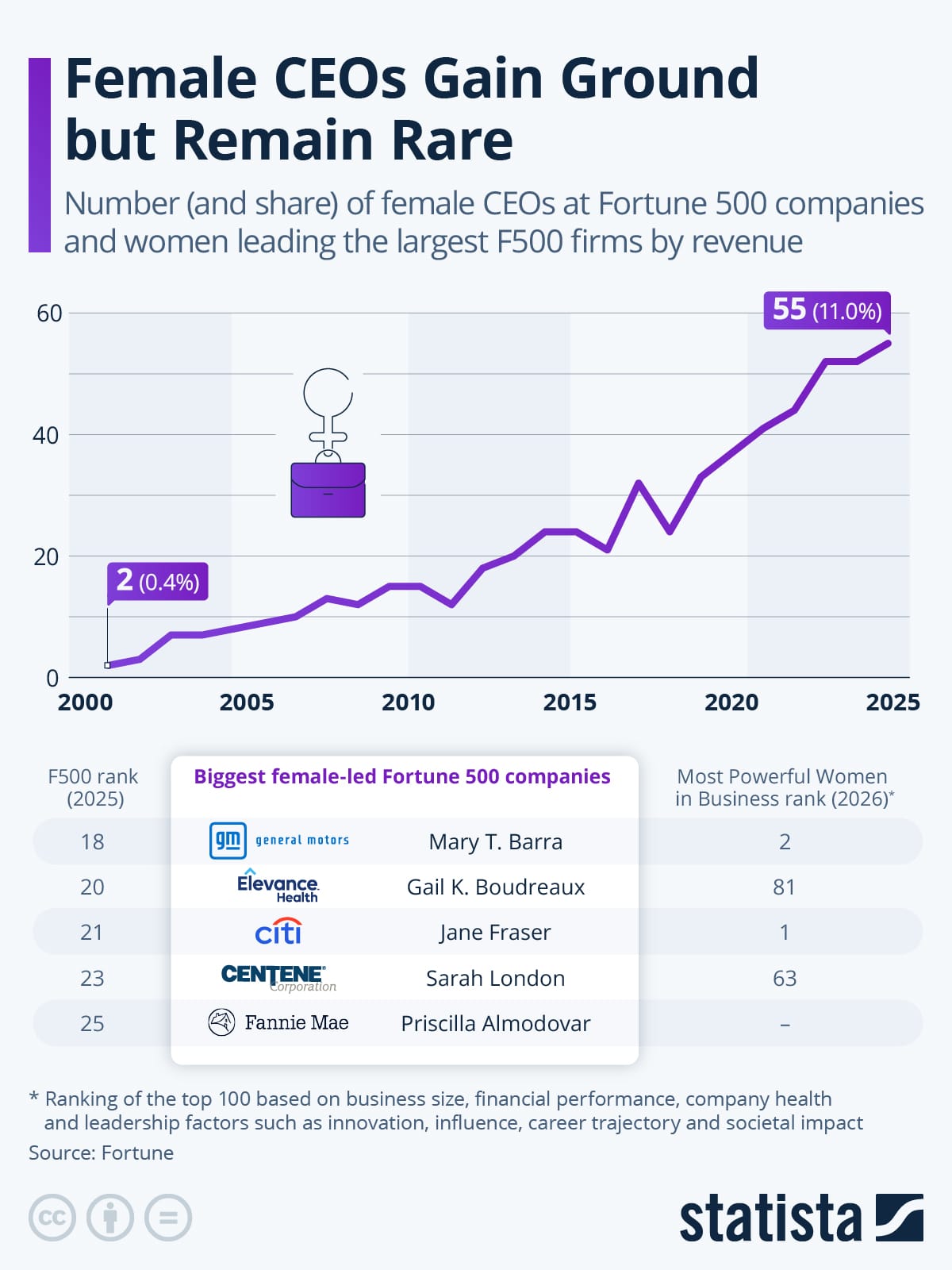
55 female CEOs is visibly great progress – however, there are 500 companies represented, so this number should be slightly over 250 to represent the population of the US.
It’s progress. However, only 2 of the 55 are Black women. If we were going by the overall demographic of the US, 15% of women in the US are Black or African American (source), so by that reckoning, at least 8 of these female CEOs should be Black women. It’s exclusive inclusion.
If data like the graph above is collected, an organisation might conclude that their DEI strategy is working (slowly). But if they collect this data intersectionally, it might tell us that we’re only progressing some ethnicities and not others. And, what about trans women? What about older women? What about queer women? Women who are domestic carers? What about women who are a combination of these factors? Is our DEI strategy taking them into account? How are they being let down, or what barriers are they meeting?
Organisations that pay attention to intersectionality can work for a much more profoundly nuanced inclusion strategy, helping them identify barriers and design more inclusive policies, and create a more empowering work environment.
What do we do about this?
- Listen. One excellent way to start engaging intersectionally is to listen and raise up voices, and seek understanding of the challenges faced by individuals so they can be addressed holistically. An organisation-wide engagement survey can help here, alongside other strategies to collect employee voice.
- Analyse the employee lifecycle. Has this been considered from attraction to recruitment, onboarding, training and retaining, through performance, leadership, and even leaving?
- Actively seek different perspectives. Include the perspectives of people of overlapping identities, and seek the opinion of more than one demographic, or consult different employee networks when designing a campaign (for instance, consult race-based employee networks as well as LGBTQIA+ networks when designing decisions around LGBTQIA+ support).
- Analyse data. How is the staff turnover rate reflected in age, gender, race and other factors, and crucially, how they overlap? How is leadership reflected? How is engagement in training reflected?
- Educate yourself. Learn about issues that affect marginalised groups, and stay on top of issues in the media. Look at what other companies do to maintain an inclusive environment.
“Intersectionality means listening to others, examining our own privileges, and asking questions about who may be excluded or adversely affected by our work. As importantly, it means taking measurable action to invite, include, and centre the voices and work of marginalized individuals. ”
Video transcript