Navigating pressure zones: a post from Automattic's Innovation Exchange

In rapidly changing times, we know that the key to success is to innovate. That’s what inspired us at Automattic to assemble a 'community of practice' made up of 13 Automatticians who simply shared a desire to learn together. Through both sync and async conversations, we’ve formed some thoughts around how to foster the conditions that are conducive to innovation. The below was published in May 2024 in honour of Learning at Work Week (13th-19th May).
Members of our community of practice (whose conversation informed this content) include: Hannah Swain Løvik , Ken Gagne , Julia Golomb , Rob Cyrino , Elena Alvarez Dosil , Ioana Muresan , Katie Brown , Krystin McGuire , Mark Biek . (This post also appeared on LinkedIn.)
Understanding pressure zones
We often find ourselves navigating the line between comfort and stress. The comfort, stretch (or learning) and panic zones can be a helpful way of thinking about this:

This was originally developed by the psychologist Lev Vygotsky, and has seen a few iterations by thinkers such as Karl Rohnke. And, it’s worth noting that the Learning Zone model has a lot in common with Carol Dweck’s work on the growth mindset, particularly the focus on embracing challenges and pushing beyond what you already know.

Ideally, we want to hover in the stretch zone when we need to innovate, taking breaks in the comfort zone to regroup and re-energise. In the stretch zone, the right amount of pressure can be beneficial, driving growth without triggering the anxiety or fear blockers associated with the panic zone. And, that zone might shift over time (you might become comfortable or even bored with something that used to be a stretch, and need a new challenge).
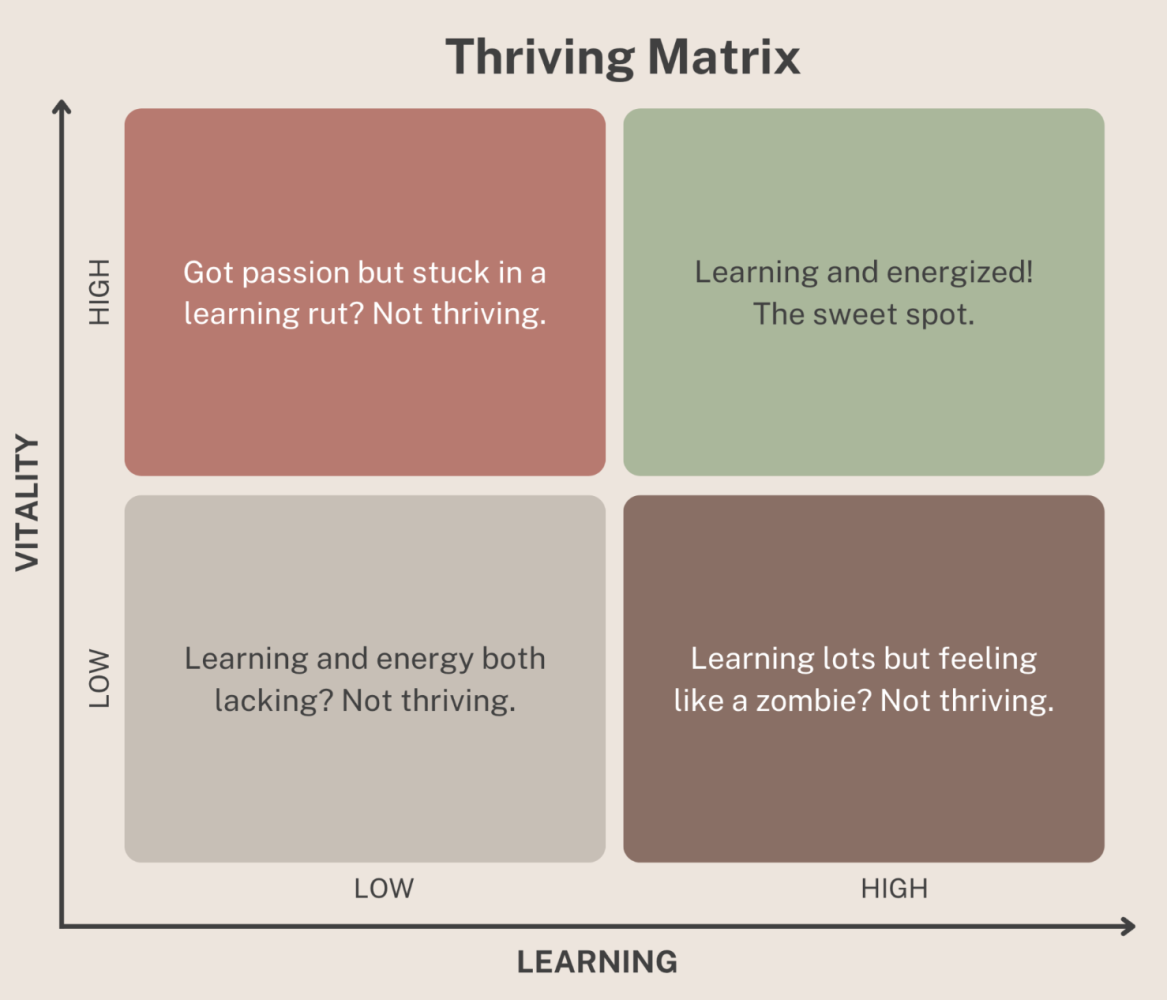
It’s also linked to the Thriving Matrix. When we’re learning and engaged, we thrive. When we’re not learning or engaged, that’s stagnation.

The risk of staying in the comfort zone for too long, though it can be tempting, is stagnation – but also, the longer you’re comfortable, the more your tolerance for being stretched diminishes. When you are then asked to stretch, it can feel overwhelming. Paradoxically, getting more comfortable with being regularly stretched can lead to increased wellbeing in that zone.
When we get into the habit to stretch ourselves in a healthy way, that allows us to recover, rest and get energized, we will not only reach the attainable goals but also manage our comfort zone to grow. - Ute Limacher-Riebold PhD (Source)
Techniques
- As well as generally working within a psychologically safe culture, we can build anchors to our comfort zones. For example, when working on something unfamiliar, can you leverage a known skill, or collaborate with a known partner?
- Can you ‘scaffold’ the uncertain or ‘stretch’ aspects via reassurance, encouragement, and feedback? Or, actual help? These might be things you can seek from your mentor, coach or other collaborators. (Automattic's coaching programme is invaluable here!)
Here’s a visual example of ‘scaffolding’ your journey to the stretch zone courtesy of Ute Limacher-Riebold PhD :

More ideas
- Can you work with a mentor to keep you grounded while stretched? This could be formally (coach, lead) or informally (a peer or friend).
- You could thrive in the stretch zone by watching others for whom these things are no longer such a stretch. For example, shadowing them ‘live’, or simply reading their output.
Automattician Julia Golomb balances stretch and comfort in this sort of way, reaching out for support if things are getting towards the panic zone:
Typically I want to spend my days in my Stretch and Comfort Zones. If I don’t feel confident in how to approach or accomplish something and lack support/guidance/clarity, then I might end up in the Panic Zone, which I (unsurprisingly) dislike. When I find myself approaching the Panic Zone, I aim to reach out for support, and remind myself that I don’t need to carry anything alone. This visual framework helps me contextualize how I’m feeling in a particular moment, and understand a central source of stress and how I can shift back into my zones of happy productivity.
If we are mindful, and notice ourselves drifting into either comfort or panic for too long, can we examine our situation and figure out what needs to change?
Further reading
- Navigating the ‘comfort, stretch, and panic zones’ at work
- Why comfort zone and stretching zone can be (almost) one
- Fixed vs Growth Mindset – beliefs that shape your life
- The Learning Zone Model
Conclusion
Innovation thrives when we understand and navigate the fine line between comfort and stress effectively. By staying mainly in the ‘stretch zone,’ we harness the right amount of pressure that propels growth without leading into panic.